
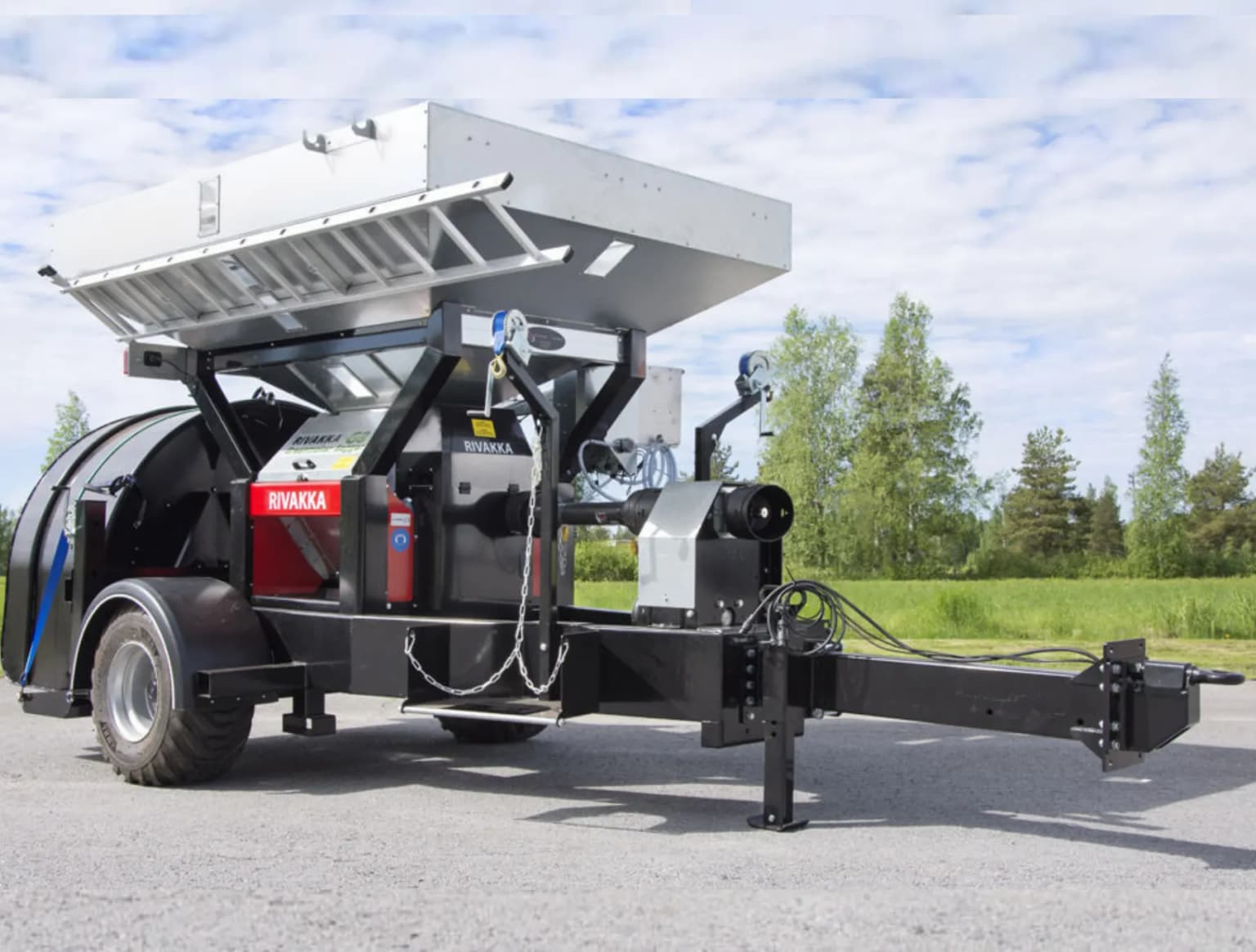
The Purpose of Grain Processing
Feeding grain whole means part of it can pass through the digestive system without being fully broken down, particularly in ruminants. Processing opens the kernel's outer structure so digestive enzymes and rumen microorganisms can act on it more effectively. The method chosen — and how well it is executed — determines how much of that potential is actually realized.
Rolling, Crushing, and Grinding: What Actually Differs
These terms are often used loosely, but they describe distinct mechanical processes. Rolling passes the grain between two rollers, flattening the kernel without necessarily separating it into many fine fragments. Crushing applies more force between rollers or plates, breaking the kernel into coarser pieces. Grinding (typically with a hammer mill) reduces the grain to a finer, more uniform particle size by impact rather than compression.
A South Dakota State University Extension feeding trial compared whole rye, hammer-milled rye, and rolled rye in cattle diets. Feeding the grain whole reduced gain and feed efficiency compared to processed grain, and rolling produced the most efficient gains among the methods tested in that trial [1]. This illustrates a general principle rather than a universal percentage: the degree and method of processing measurably affects how efficiently the animal converts the grain into weight gain, though the exact outcome depends on grain type and the specific trial conditions.
Why Kernel Structure Matters for Feeding
A kernel's outer layer limits the rate at which rumen microorganisms can access the starch inside. Processing reduces this barrier, but there is a practical limit: over-processing produces excessive fine particles, which research on rolling and grinding methods has associated with less consistent animal performance and a higher risk of digestive upset in some conditions [2]. The goal is a particle size that improves access without shattering the kernel into powder.
Moisture, Roller Gap, and Uniformity
Grain moisture content affects how a kernel behaves under the rollers — drier grain tends to shatter more readily, while grain with higher moisture can be flattened more predictably. Peer-reviewed comparisons of dry rolling, temper rolling, and steam flaking report that adding controlled moisture before rolling reduces fine-particle production and kernel shattering compared with dry rolling alone, though the added moisture also shortens safe storage time before spoilage risk increases [3].
The roller gap — the physical distance between the two rollers — is the main adjustable variable that determines final particle size. A gap set too wide leaves grain under-processed; too narrow increases fine particle production and energy use per unit processed. Because optimal gap settings vary by grain type, moisture content, and target use, this is typically a parameter that needs on-site adjustment rather than a fixed factory setting.
Capacity and Energy Consumption
Throughput capacity and energy consumption are directly related to how much the grain is being compressed and how fine the target particle size is. Finer processing generally requires more energy per unit of grain than coarser rolling. For an operation with a defined daily grain volume, matching machine capacity to that volume — rather than over- or under-sizing the equipment — is what keeps energy use proportional to actual need.
Criteria to Evaluate When Selecting a Machine
The right machine depends on grain type, target particle size, available power source, and daily volume. The table below summarizes the main technical points worth checking before a purchase decision.
| Criterion | Why it matters |
|---|---|
| Roller gap adjustability | Determines whether particle size can be tuned per grain type |
| Drive type (electric / PTO) | Must match available power infrastructure on site |
| Rated throughput capacity | Should match, not exceed, actual daily processing volume |
| Moisture tolerance | Affects consistency of output across different grain conditions |
| Ease of roller maintenance | Affects long-term operating cost and downtime |
Evaluating for Different Operation Sizes
A smaller operation processing grain for its own livestock has different priorities than a feed production facility running continuous shifts. For smaller operations, ease of use and maintenance simplicity often outweigh raw throughput. For larger or continuous operations, sustained capacity, drive reliability, and the ability to service the machine without extended downtime become more central to the selection.
Maintenance and Operating Costs
Roller wear is the main recurring maintenance item in grain processing equipment, since rollers are in constant mechanical contact with an abrasive material. A simpler mechanical design generally means fewer components that can fail and more straightforward on-site servicing, which affects total operating cost over the equipment's working life more than the purchase price alone.
Conclusion
Grain processing is not simply a matter of making the kernel smaller — the method, roller gap, moisture handling, and machine capacity all interact to determine how efficiently the processed grain is actually used by the animal. Evaluating a machine against the operation's real grain type, volume, and power source is a more reliable approach than choosing based on the highest rated capacity.
Sources
- South Dakota State University Extension — Feeding Hybrid Rye Grain to Cattle
- IntechOpen — Effects of Grain Processing with Focus on Grinding and Steam-Flaking on Dairy Cow Performance
- Applied Animal Science (peer-reviewed journal) — Comparison of the Effects of Dry Rolling, Temper Rolling, and Steam Flaking Barley Grain on Dry Matter Intake, Growth, and Carcass Characteristics of Finishing Beef Steers
As the solution partner for Rivakka grain processing machines in Turkey, Arles supports operations in evaluating the right model for their site through the Rivakka grain processing machine family.