
How Waste Volume Affects Logistics Cost
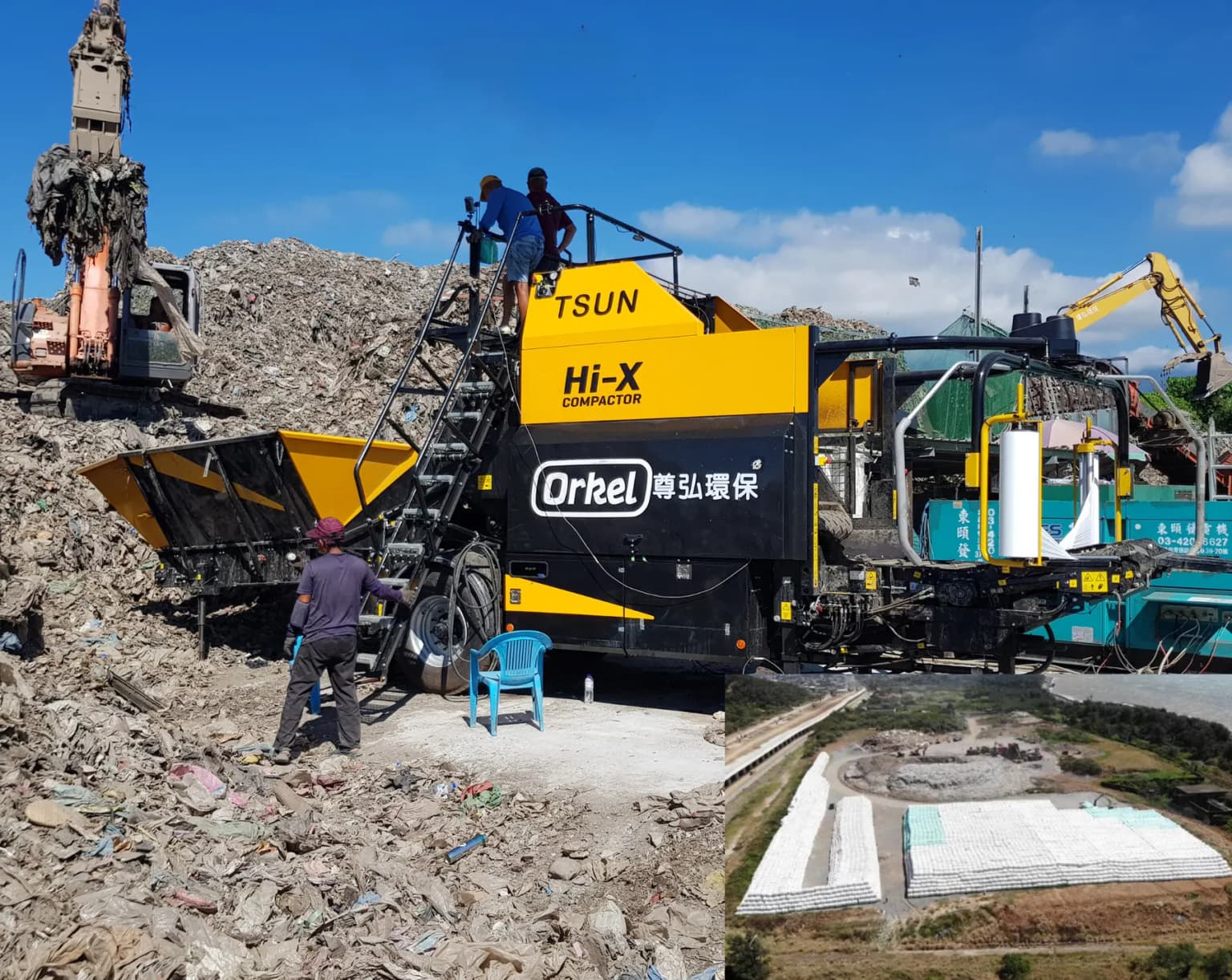
Every transport trip and every square meter of storage has a cost, whether that cost is measured in fuel, labor, or land use. Uncompressed waste occupies more of both. The core function of a baling system is to convert bulky, irregular waste into standardized, dense units that make more efficient use of a truck bed or storage yard — the U.S. EPA's evaluation of solid waste baling operations describes exactly this: baled waste can be planned around a fixed number of bales per truck load and stacked in a predictable, systematic pattern at the storage site [1]. This kind of volume reduction is also a regulatory priority: the EU Landfill Directive requires member states to progressively reduce the amount of waste sent to landfill, which puts direct pressure on facilities to handle waste more efficiently before disposal [2].
The Baling and Packaging Process
Waste is fed into a compression chamber, typically via a hopper or conveyor. A hydraulic ram compresses the material under pressure, and once a bale is formed, it is wrapped in film or netting and ejected. The specific chamber size, pressure capability, and cycle time vary by machine, but this compress-wrap-eject sequence is common across baling equipment designed for solid waste, recyclables, or agricultural residue.
Key Variables That Determine Energy Consumption
Energy use in a baling system is not a fixed number — it depends on several interacting variables specific to the material and the operation.
- Material type and density: Denser, more resistant materials require more hydraulic force — and therefore more energy — to reach the same compression ratio as looser, more compressible waste.
- Compression pressure: Higher pressure produces denser, more transport-efficient bales, but pressure and energy input are directly related — pushing for maximum density has a proportional energy cost.
- Cycle time: A faster cycle processes more material per hour, but the hydraulic system also works harder in a shorter window; cycle time should be matched to actual waste inflow rather than run at maximum speed by default.
- Machine capacity relative to actual load: A machine significantly oversized for the facility's daily waste volume runs its hydraulic system below its efficient operating range for much of the day.
- Unnecessary idle running: A baler left running without material being fed consumes energy without producing output — this is one of the more straightforward inefficiencies to eliminate through operational discipline alone.
| Variable | Effect on energy use |
|---|---|
| Material density | Denser material requires more hydraulic force per bale |
| Compression pressure | Higher pressure increases bale density and energy cost together |
| Cycle time | Faster cycles increase hydraulic workload per hour |
| Machine sizing vs. actual load | An oversized machine runs below its efficient range |
| Idle running | Consumes energy without producing output |
Operational Planning
Scheduling waste intake to match the machine's cycle — rather than running continuously regardless of actual material flow — reduces idle operation. Grouping similar waste types into batches where possible can also reduce the number of pressure or setting adjustments the operator needs to make, which indirectly supports more consistent, efficient cycles.
How Maintenance Affects Energy Consumption
A hydraulic system with worn seals, low fluid levels, or a poorly maintained pump has to work harder to reach the same pressure, consuming more energy for the same output. Wrapping mechanisms and cutting components that are not properly maintained can also slow the cycle, indirectly increasing the energy used per bale produced. Scheduled maintenance is therefore not only a reliability measure but also a factor in energy efficiency over the machine's working life.
Total Cost of Ownership in System Selection
Purchase price is only one part of the real cost of a baling system. Energy consumption, maintenance frequency, wear-part replacement, and expected service life all contribute to the total cost of ownership over the equipment's lifetime. A system evaluated only on upfront price and rated capacity, without considering these factors, can end up costing more to operate than a better-matched alternative.
Conclusion
Energy efficiency in a baling system is less about a single specification and more about matching machine capacity, pressure settings, and operating schedule to the actual waste stream, while keeping the hydraulic system properly maintained. Evaluated this way, a baling system is not just a compaction machine — it is a logistics tool that determines how efficiently a facility moves waste from generation to storage or disposal.
Sources
- U.S. Environmental Protection Agency (EPA) — Evaluation of Solid Waste Baling and Balefills
- European Commission — Directive 1999/31/EC on the Landfill of Waste (as amended by Directive (EU) 2018/850)
As the solution partner for Orkel industrial waste packaging systems in Turkey, Arles supports facilities in evaluating capacity and energy needs through the Orkel industrial waste packaging systems.